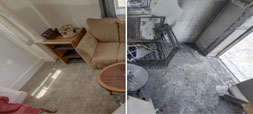
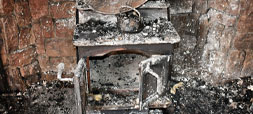
CFITrainer.Net is pleased to launch a new resource, Job Aids. CFITrainer.Net Job Aids provide reference and assistance in completing major fire investigation tasks. Every scene is different and may not need every item in the Job Aid, but it is a helpful tool to assist the fire investigation professional in working through executing that task while applying their knowledge, skills, and experience to determine actions to take at a particular scene. Job Aids are free and do not require a CFITrainer.Net login. The fire investigation professional decides how to best use a Job Aid and integrate it into their workflow.
There are two types of Job Aids.
The first type of Job Aids are form-fillable PDFs that can be used during the fire investigation process to accomplish scene examination tasks. The PDF can be filled out on scene using a tablet, laptop, phone, or other device. The PDF can also be printed out and used as a pen-and-paper tool.
The second type of Job Aids are handout reference guides and templates available in PDF. These Job Aids are not form-fillable. For greatest ease of use, CFITrainer.Net recommends printing out handout reference guides and templates Job Aids.
This CFITrainer.Net Job Aids resource launched with a form-fillable Site Safety Assessment Checklist Job Aid. This Site Safety Assessment Checklist Job Aid includes tasks for arrival, initial evaluation, building construction details, exterior assessment, interior assessment, scene management, diagramming, and hazard identification, mitigation, and monitoring. [screen cap of Site Safety Assessment Job Aid pages] Simply download the Checklist, bring it up on your device at the scene, and check off items when completed, type in details and notes, and even draw using Acrobat Reader’s tools (if your device enables them). If desired, save the completed Checklist with your scene documentation. Alternatively, you can use the checklist without filling it out or print and use a paper copy.
CFITrainer.Net will be rolling out new Job Aids in the future. We welcome your feedback and suggestions for future Job Aids. Please use our Support Request form and select “Suggestion for Improvement” under “Request Type.”
“An Overview of Lithium-Ion Batteries - Types of Cells, Make up of cells, Overview of Failures, Safe Storage and Transportation” will cover the common cell types, components and make up. In addition to common failures found in todays fire scenes. A review of common practices for collection, safe storage and transportation will also be covered in this one(1) hour virtual training opportunity.
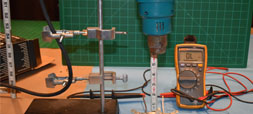
This module introduces basic electrical concepts, including: terminology, atomic theory and electricity, Ohm’s Law, Joule’s Law, AC and DC power.
Electrical Systems 1
This module looks at the many ways fire investigators enter and grow in the profession through academia, the fire service, law enforcement, insurance, and engineering.
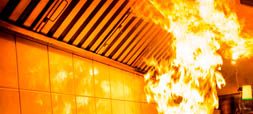
This module describes the design, construction, components, and operation of a commercial kitchen’s ventilation, fire suppression, and cooking fuel systems.
Commercial Kitchen Fires 1
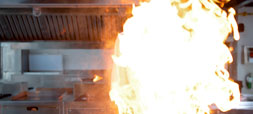
This module provides an investigative framework for commercial kitchen fires and discusses major commercial kitchen systems and activities as they relate to possible fire origin and cause.
Commercial Kitchen Fires 2
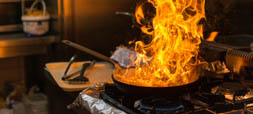
This module looks at four of the most commonly-reported accidental fire causes: cooking equipment, heating equipment, electrical distribution, and smoking materials.
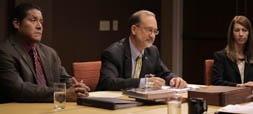
This program brings three highly experienced fire investigators and an attorney with experience as a prosecutor and civil litigator together for a round table discussion.
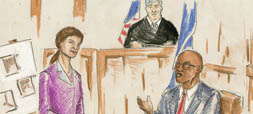
This module introduces the elements of a deposition, discusses typical lines of questioning, and describes how to prepare for a deposition.
Depositions 1
The program discusses the basics of digital photography for fire investigators as well as software and editing procedures for digital images intended as evidence.
This module will discuss the techniques and strategies for conducting a proper science-based fire scene investigation and effectively presenting an investigator’s findings in court as an expert witness.
This program explains the basic principles of how electric and hybrid vehicles are designed and work, including major systems and typical components.
Electric & Hybrid Vehicles 1
This program discusses common failure modes, evidence handling procedures, and safety protocols for electric and hybrid vehicles.
Electric & Hybrid Vehicles 2
This module presents critical electrical safety practices that every fire investigator should implement at every scene, every time.
Electrical Systems 2
Should you work for a private lab as a consultant if you are on an Arson Task Force? How about accepting discounts from the local hardware store as a “thanks” for a job well done on a fire they had last year?
This module takes investigators into the forensic laboratory and shows them what happens to the different types of fire scene evidence that are typically submitted for testing.
This module discusses investigative tasks specific to fatal fires, including properly recovering and moving a body and interpreting fire effects on the body within the context of the fire scene.
Fatal Fires 3
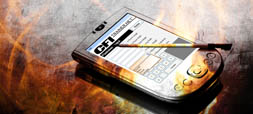
The program is designed to introduce a new Palm/Pocket PC application called CFI Calculator to users and provide examples of how it can be used by fire investigators in the field.
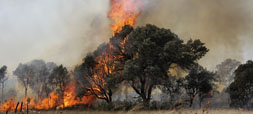
This module discusses foundational wildfire terminology, factors that influence wildfire behavior, how these factors interact to produce fire effects, and new research into wildfire dynamics.
Wildfires 1
Learn about the mass loss and deformation effects of heat on fuels, including definition, formation explanation, the fire scene context, and implications for fire pattern analysis.
Fire Effects 1
Learn how combustion by-products that cause discoloration and smoke deposition on surfaces and the implications for fire pattern analysis.
Fire Effects 2
This module provides a road map for fire officers to integrate and navigate their fire investigation duty with all their other responsibilities and describes where to obtain specific training in fire investigation.
The evaluation of hazards and the assessment of the relative risks associated with the investigation of fires and explosions are critical factors in the management of any investigation.
PPE 1
This module provides instruction on the fundamentals of residential building construction with an eye toward how building construction affects fire development.
This module helps the investigator understand how IGL canine teams are trained and worked so investigators can work in partnership with the handler to conduct searches successfully and safely.
This program discusses how to access insurance information, understand insurance documents, ask key questions of witnesses, and apply the information learned.
This program introduces the fire investigator to the issues related to the collection, handling and use of evidence related to a fire investigation.
Evidence 1
This program takes you inside the National Institute of Standards and Technology (NIST) archives of some of the most interesting and instructive test burns and fire model simulations they have ever conducted.
This program describes the scope of the youth-set fire problem, how fire investigation addresses it, and the fire investigator’s responsibilities in a youth-set fire case.
Youth-Set Fires 1
This self-paced program will help you understand what to expect at a fire where an LODD has occurred, what your role is, how to interact with others, and how to handle special circumstances at the scene.
This module discusses the juvenile justice system, legalities of interviews and interrogations, arson statutes, search and seizure, and confidentiality.
Youth-Set Fires 2
This program explains what lithium-ion batteries are, how they are constructed, where they are used, safety concerns, and how they can cause fires and explosions.
This program discusses the latest developments in expert testimony under the Daubert standard, including the MagneTek case decided in the United States Circuit Court of Appeals.
This program covers the general anatomy of a motor vehicle and a description of typical components of the engine, electrical, ignition, and fuel systems.
Motor Vehicles 1
This module explains the different types of physical testing, modeling, and scientific research available for hypothesis testing.
Origin & Cause Hypothesis Testing 2
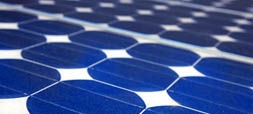
This module discusses how photovoltaic systems work, how they are designed and installed, and how to safely interact with them when investigating a fire scene.
This module lays the groundwork for understanding marine fires by covering four basic concepts that the investigator must understand before investigating a marine fire.
In this module, you will learn more about how cancer develops, what occupational exposure risks to carcinogens exist at fire scenes, and how to better protect yourself against those exposures.
The use of the process of elimination in the determination of a fire cause is a topic that has generated significant discussion and controversy in the fire investigation profession.
This module discusses investigating a fire when natural gas is present, including natural gas as an ignition and fire spread source, documentation, and system testing.
Natural Gas 2
This module explains the principles of search and seizure under the Fourth Amendment, as contained in the amendment and according to subsequent case law and applies them to typical fire scene scenarios.
This module describes how to conduct a site safety assessment, identify potential hazards, craft a plan to mitigate risks, and act so you do not bring the hazards home.
PPE 2
This module maps out the organic process for how the investigator identifies information needed during an origin and cause examination and obtains that information.
Sources of Information 1
This self-paced program explains to non-investigators the role of the fire investigator, what the fire investigator does, how the fire investigator is trained, what qualifications the fire investigator must meet.
This program untangles the meanings of “undetermined,” explains its correct usage, and describes how to properly report “undetermined” fire cause and classification.
Arc Mapping, or Arc Fault Circuit Analysis, uses the electrical system to help reconstruct a scene, providing investigators with a means of determining the area of a fire’s origin.
Electrical Systems 4